ERDDAP
Type of resources
Available actions
INSPIRE themes
Keywords
Contact for the resource
Provided by
Years
Formats
Representation types
Update frequencies
status
Scale
-
Aerosol Optical Depth (AOD) 500nm and alpha.
-
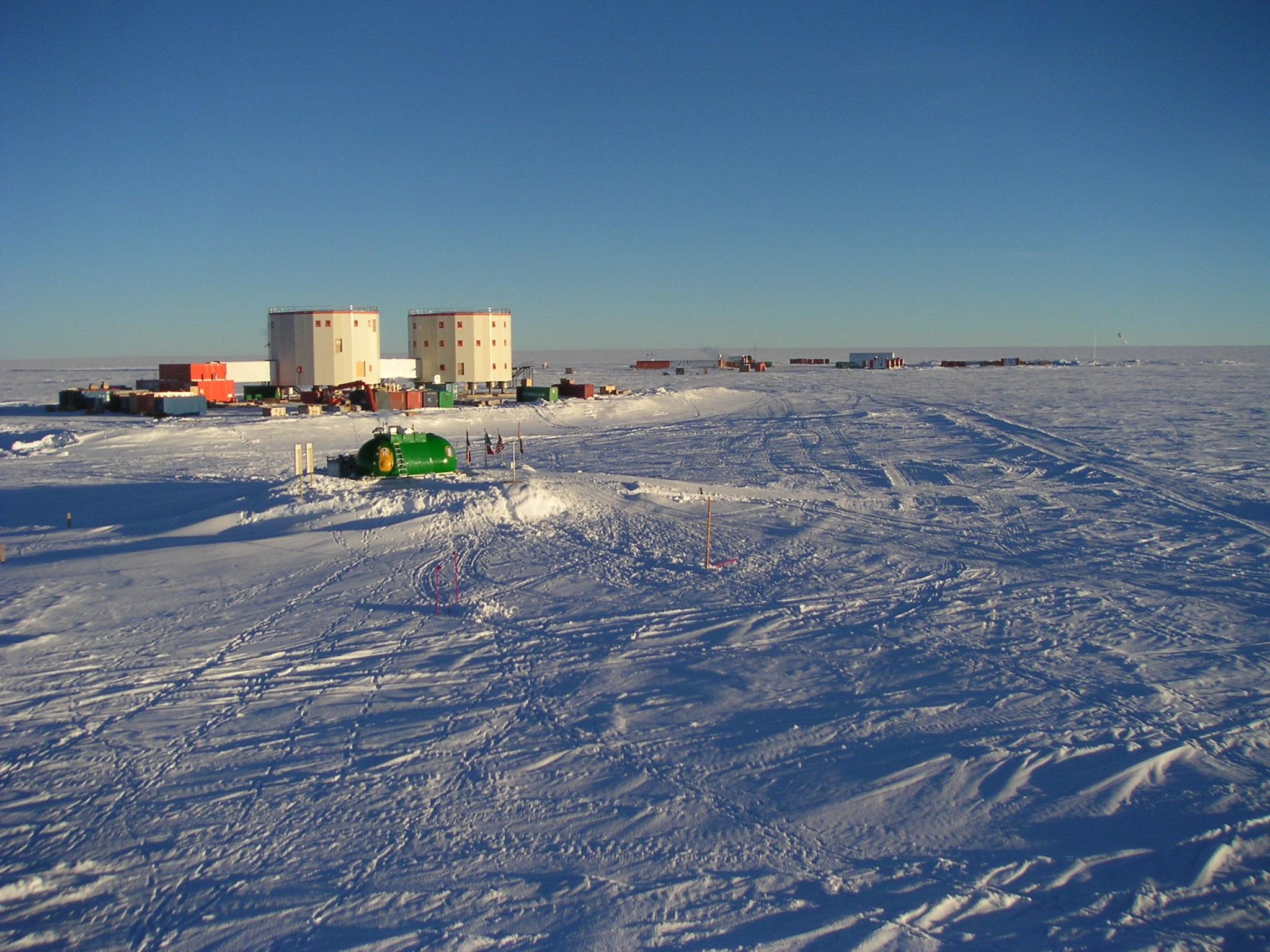
This dataset reports the snow density, temperature and hardness observations from the surface to 1 m depth at the Concordia Station, Antarctica. A snow trench is dig once per month (or every three months during winter) in the clean area near the Station (< 1 km). The snow density measurements are taken inserting a core barrel (with a diameter of 4.5 cm and a length of 25 cm) horizontally into the snow every 10 cm from 0 to 1 m depth. The snow density is calculated from the weight. For each layer the temperature and the hardness (ranging from 1 to 6) are also recorded.
-

The only borehole equipped the international standard and within the network managed by the PNRA OSS-12 is located very close to MZS named OASI. The site (-74.74167;164.1;52 m slm) is a flat granitic outcrop. The borehole was drilled with compressed and refrigerated air in the austral summer of 2007 and equipped in 2008. The borehole is 31 m deep and the ZAA is ca 26m and there are 20 thermistors at different depths. Here, only the temperature closest at ZAA depth has been reported.
-

SWD and DIF solar fluxes. Institute of Polar Sciences data from a local source.
-
An updated compilation of published and new data of major-ion (Ca, Cl, K, Mg, Na, NO3, SO4) and methylsulfonate (MS) concentrations in snow from 520 Antarctic sites is provided by the national ITASE (International Trans-Antarctic Scientific Expedition) programmes of Australia, Brazil, China, Germany, Italy, Japan, Korea, New Zealand, Norway, the United Kingdom, the United States and the national Antarctic programme of Finland.
-
This dataset reports the water stable isotope composition (d18O, dD, D-excess) of precipitation at the Concordia Station, Antarctica. Daily precipitations are collected on benches (height: 1 m) in the clean area 800 m from the Station by the Concordia winter-over personnel. All samples are analyzed with laser spectroscopy (CRDS) or mass spectrometry (IRMS). 2008-2017 data are available here: https://doi.org/10.5281/zenodo.10197160; 2017-2021 data are available here: https://doi.org/10.1594/PANGAEA.971486
-
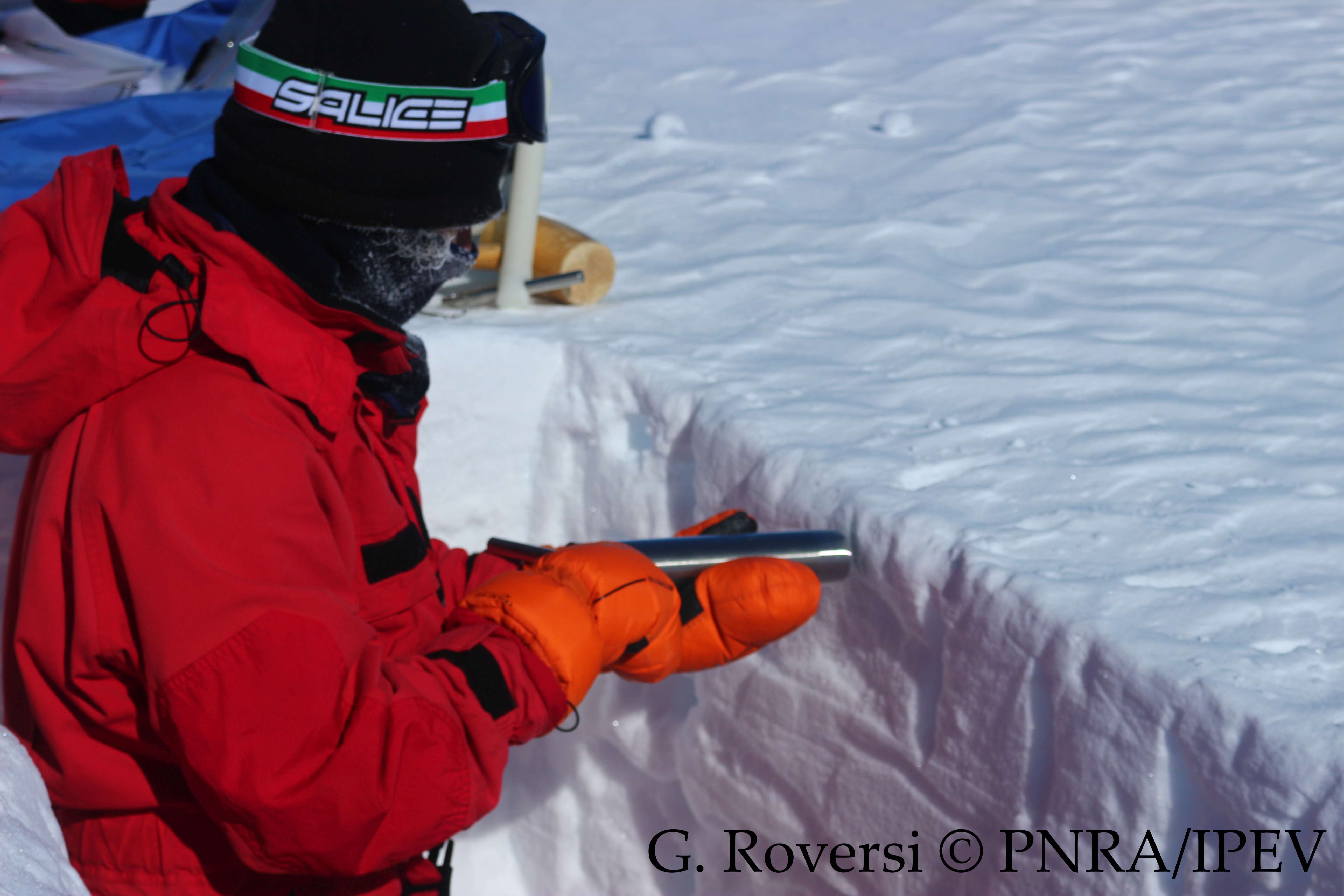
This dataset reports the snow density observations at the Concordia Station, Antarctica. A snow trench is dig once per month (or every three months during winter) in the clean area near the Station (< 1 km). Four measurements are taken inserting a core barrel (with a diameter of 4.5 cm and a length of 25 cm) horizontally into the snow at 10 cm depth, and four more measurements are taken inserting another core barrel (with a diameter of 3.7 cm and a length of 9.2 cm) vertically, from the surface to 10 cm depth. The snow density is calculated from the weight.
-
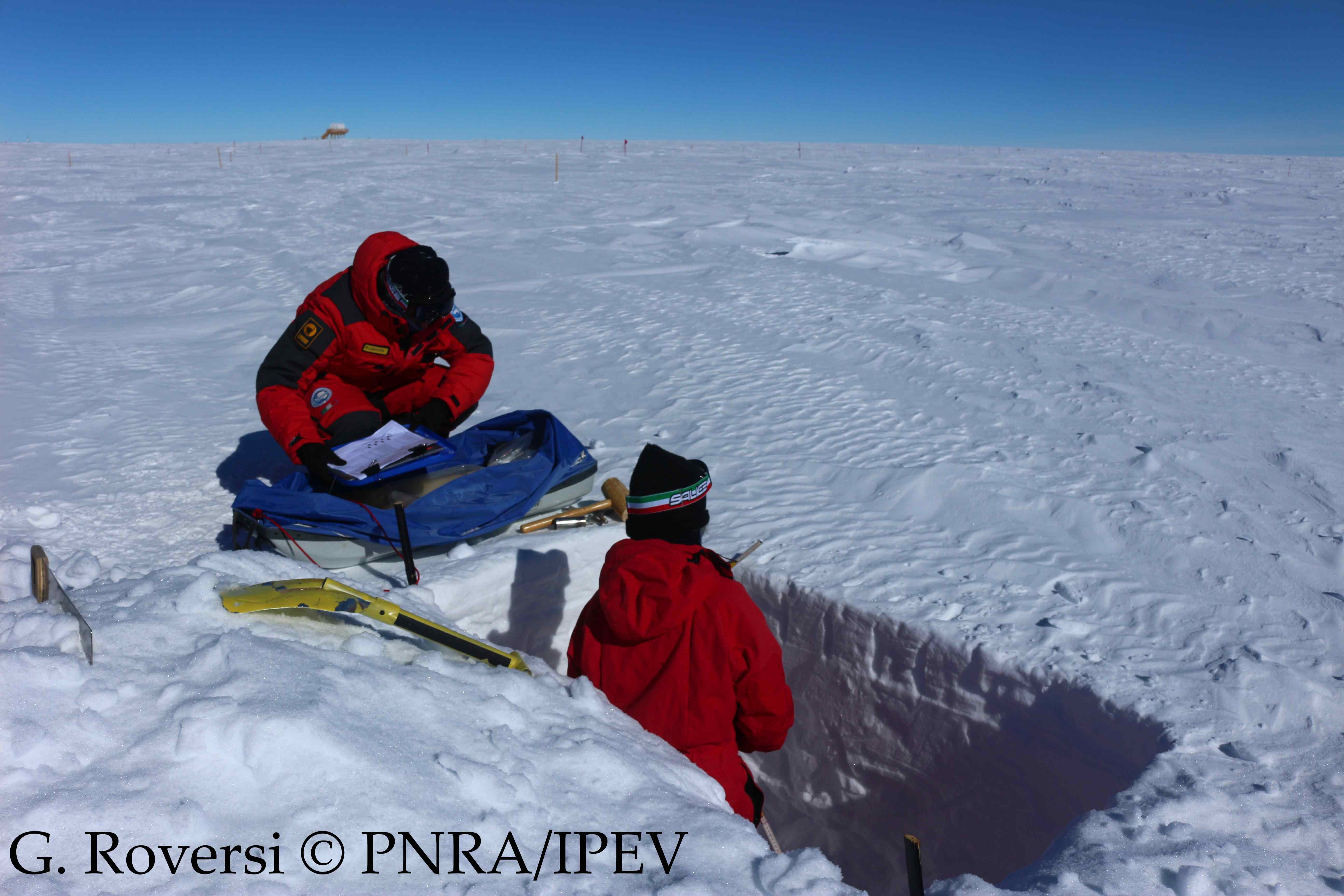
This dataset reports the snow density, temperature and hardness observations from the surface to 1 m depth at the Concordia Station, Antarctica. A snow trench is dig once per month (or every three months during winter) in the clean area near the Station (< 1 km). The snow density measurements are taken inserting a core barrel (with a diameter of 4.5 cm and a length of 25 cm) horizontally into the snow every 10 cm from 0 to 1 m depth. The snow density is calculated from the weight. For each layer the temperature and the hardness (ranging from 1 to 6) are also recorded.
-

In the Project PermVegNet (OSS-12) there are 14 sites between 73 and 78°S in which shallow boreholes of 1 m of depth are equipped with 4 thermistors (accuracy 0.2°C) placed at 2, 30,60, 100 or the maximum depth reachable close to 100 cm) to monitor the thermal regime of the active layer and to obtain one of the essential climatic variables (ECV) the active layer thickness that is the maximum depth of the annual 0°C isotherm. Here are added also other two deeper boreholes (Oasi A8 (31 m); Boulder Clay (3.6 m), where ALT is also determinable. In the same sites also a the air temperature, the soil moisture at 2 cm of depth in the ground and the PAR or PIR are measured to establish their relations to the ground thermal regime.
-
.jpg)
Commandant Charcot. Italian National Research Council - Institute of Polar Sciences data from a local source.